Overview
Group trips shouldn’t fall apart before they start. Airbnb treats a group trip as a single transaction with a single customer, so every part of the coordination that makes it hard happens somewhere else. We redesigned the experience from research through high-fidelity prototype, starting with the hardest part: the money.
One person finds the place, one person pays for it, and one person spends the next three weeks chasing everyone else for money.
How do you move a group trip off the cardholder without making it impossible for the group to commit to anything?
Airbnb has no real group booking. The platform treats a group trip as a single transaction with a single customer, so every part of the coordination that makes a group trip hard happens somewhere else: a text thread, a spreadsheet, a payment app.
That structure doesn’t just inconvenience the organizer. It quietly removes agency from everyone else. If you didn’t book it you can’t see the reservation, can’t weigh in on the choice, and can’t tell whether your share has been counted.
82% wanted to split fairly, and that finding killed the obvious solution
We designed and distributed a structured survey to understand how people navigate group bookings now, not just the functional pain points but the social friction underneath them.
82% wanted to split costs fairly.
Some meant even splits. Others meant proportional by room size or arrival date. A third group meant custom amounts they’d negotiated themselves. Any single split model would have alienated two-thirds of users no matter which one we picked.
63% wanted payment reminders.
Not because they’re forgetful, but because asking friends for money is uncomfortable. People wanted the platform to handle the follow-up so they didn’t have to.
71% wanted to share the planning workload.
The organizer role is exhausting, and respondents wanted tools that distributed it rather than tools that made one person faster at it.
The split model is not ours to choose.
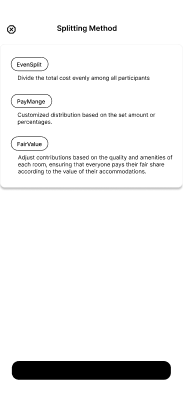
So the real decision wasn’t which split model is correct. Each group declares its own definition of fair at the start, and the product commits to it: EvenSplit for friends going halves, FairValue for proportional splits, PayManage for custom amounts.
The same logic drove the second decision. If the core problem is that one person carries the whole trip, then one person also shouldn’t be able to commit the group to it. Requiring group sign-off before booking is deliberate friction: slower to commit, but it moves the power off the cardholder and onto the group. That tradeoff is the argument the whole redesign rests on.
Where the group hub took shape, before any of it had to look like Airbnb.
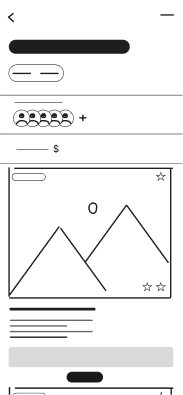
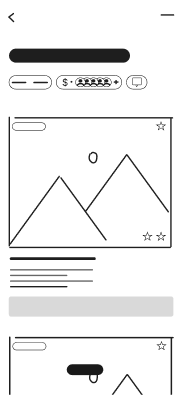
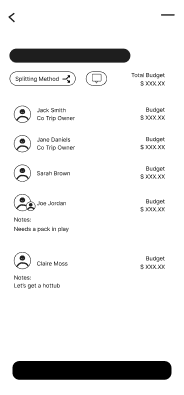
Three things had to work: shared planning, a split model the group chooses, and a hub every traveler can see. These wireframes are where we worked out what each one looks like in practice: a shared wishlist, bed assignment, and the first attempt at putting splitting inside the app instead of outside it.
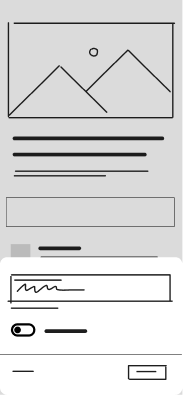
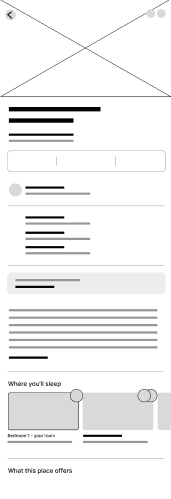
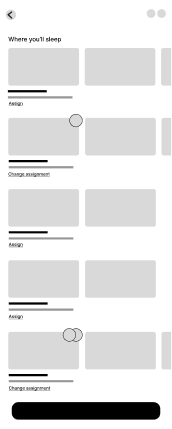
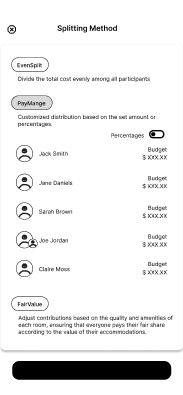
Eight screens from the first build
Click any to see it closer
Three moves, each one taking something the organizer was doing alone and handing it to the group.
The group hub is where a trip now lives: the choice, the money and the conversation in one place, visible to everyone on it rather than to whoever happened to book.
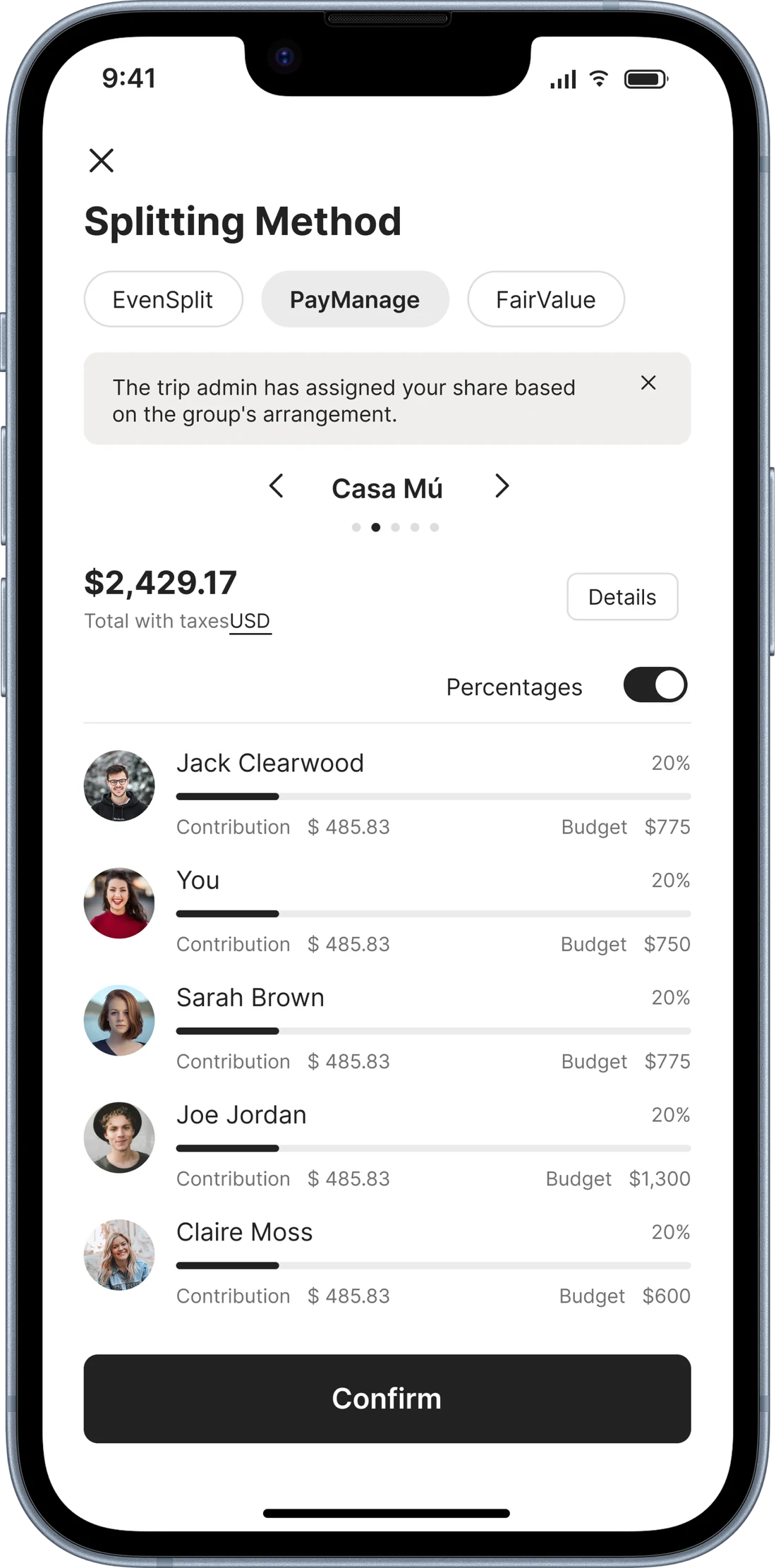
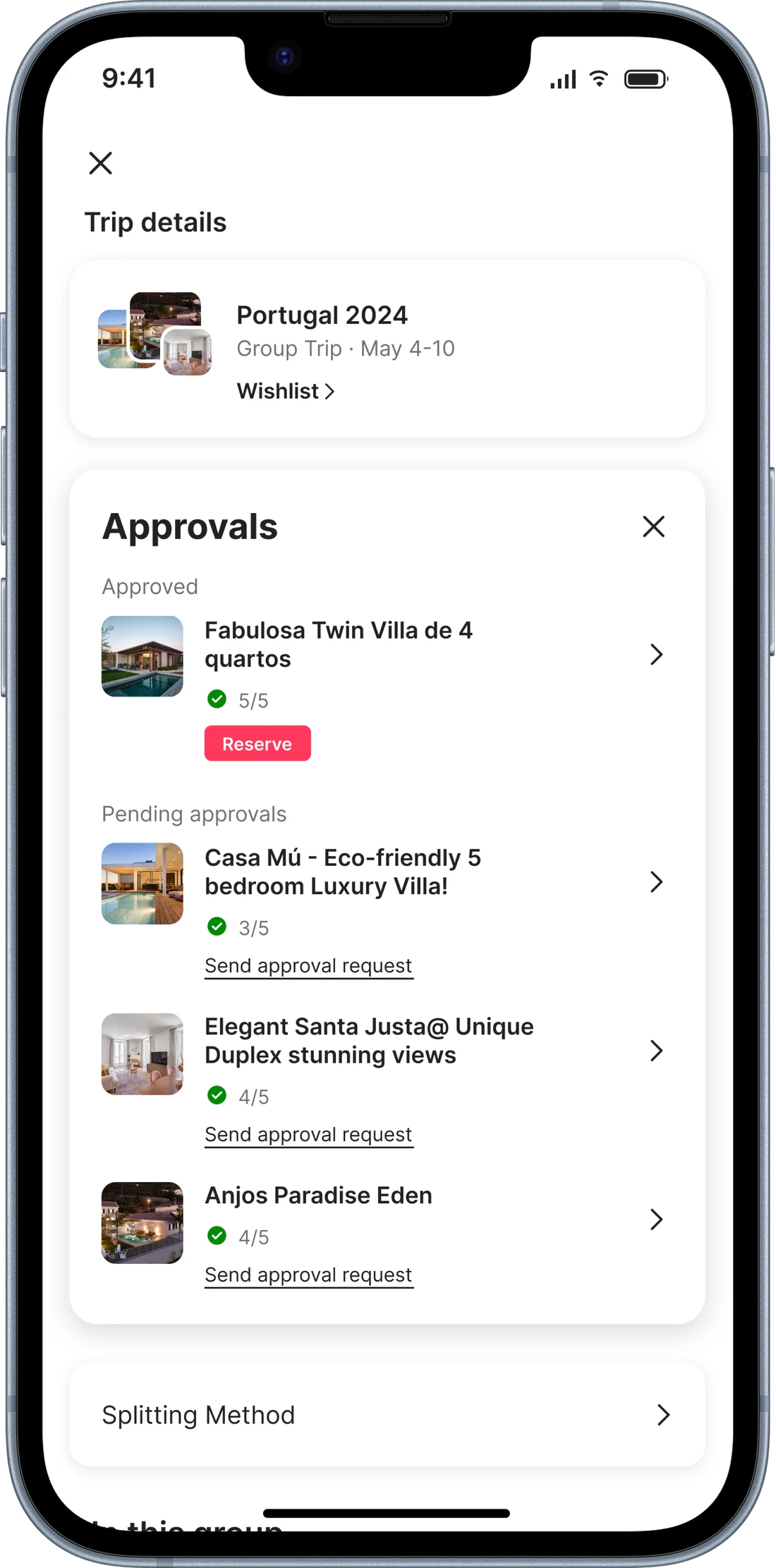
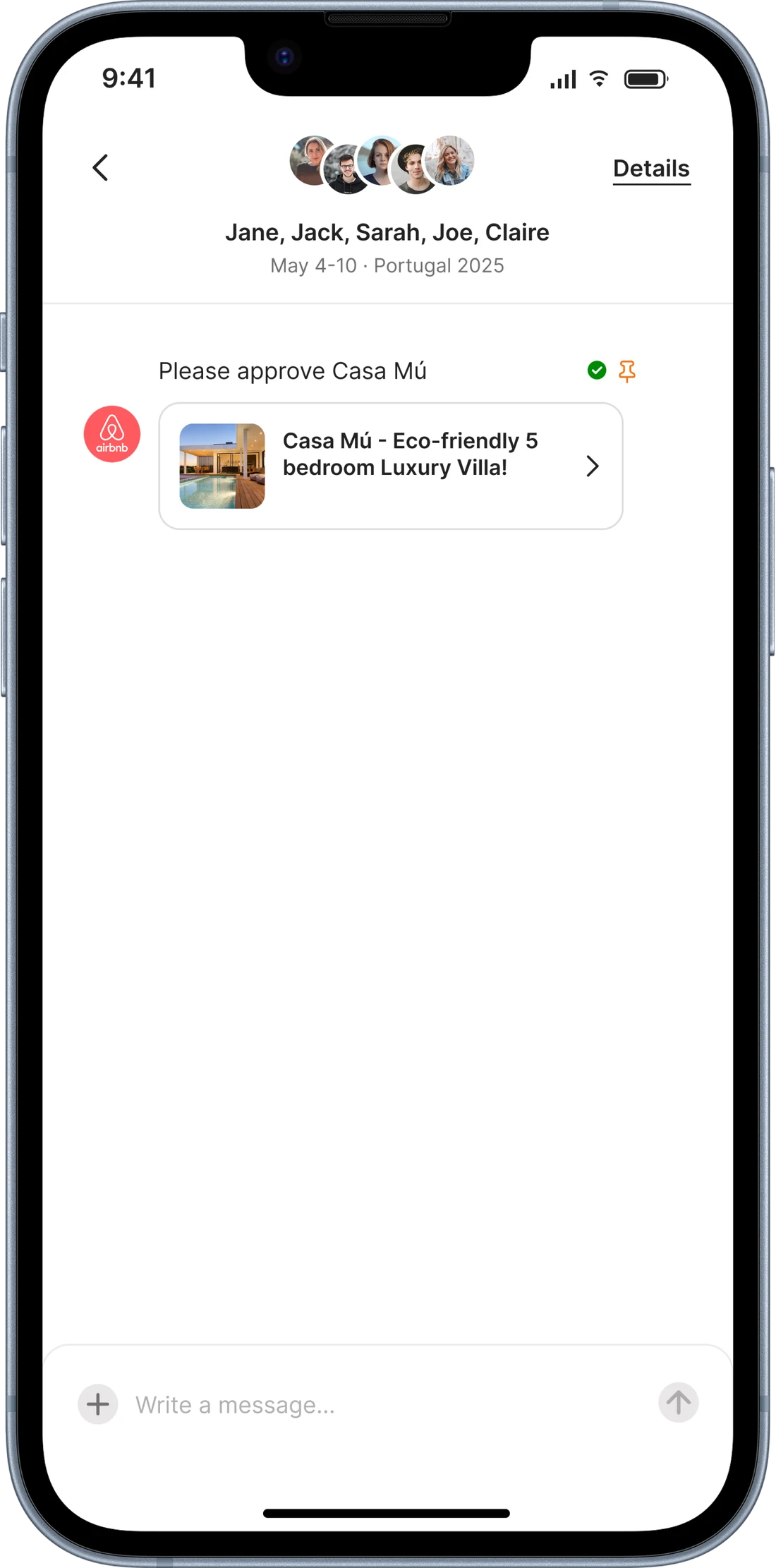
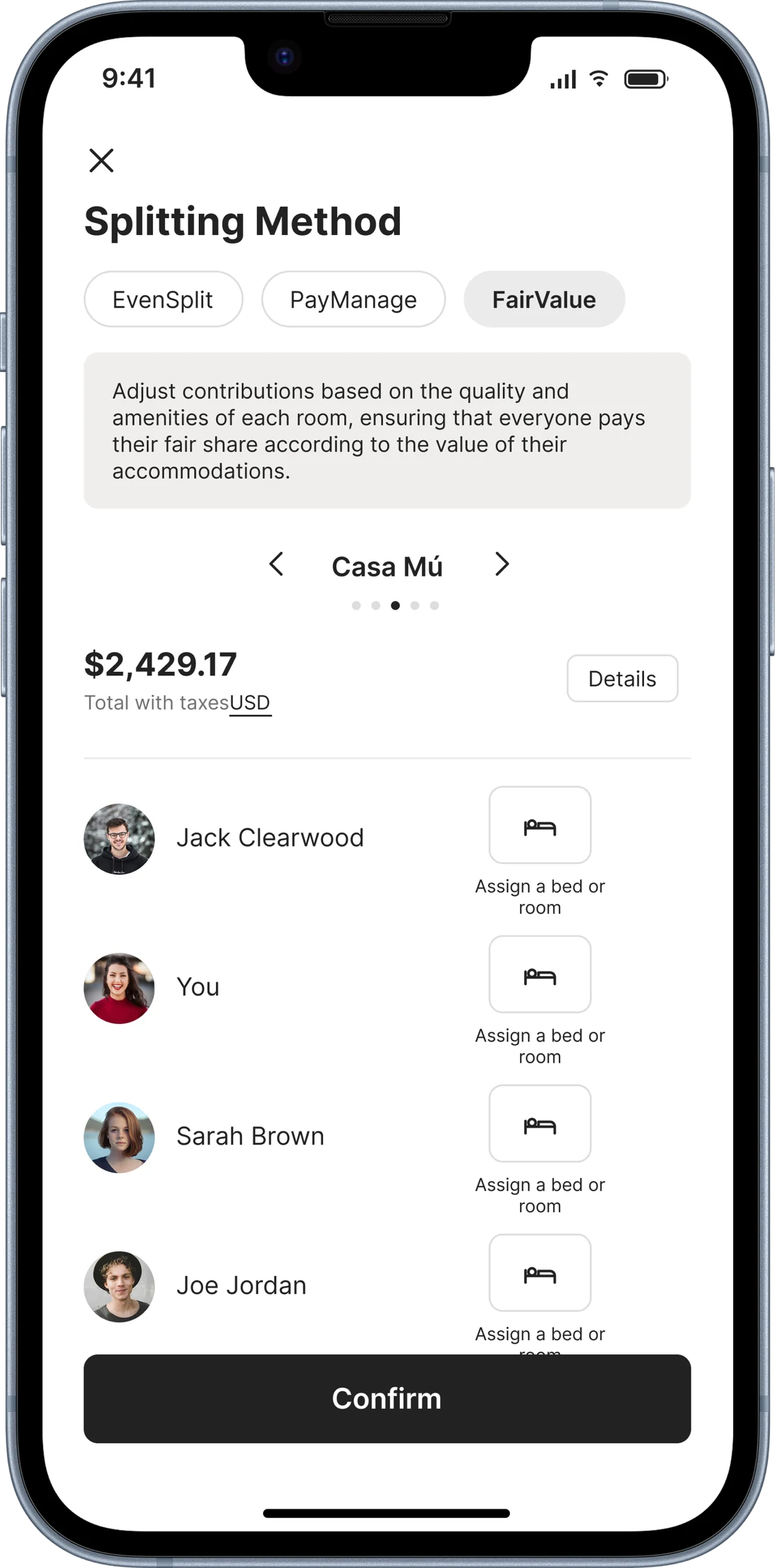
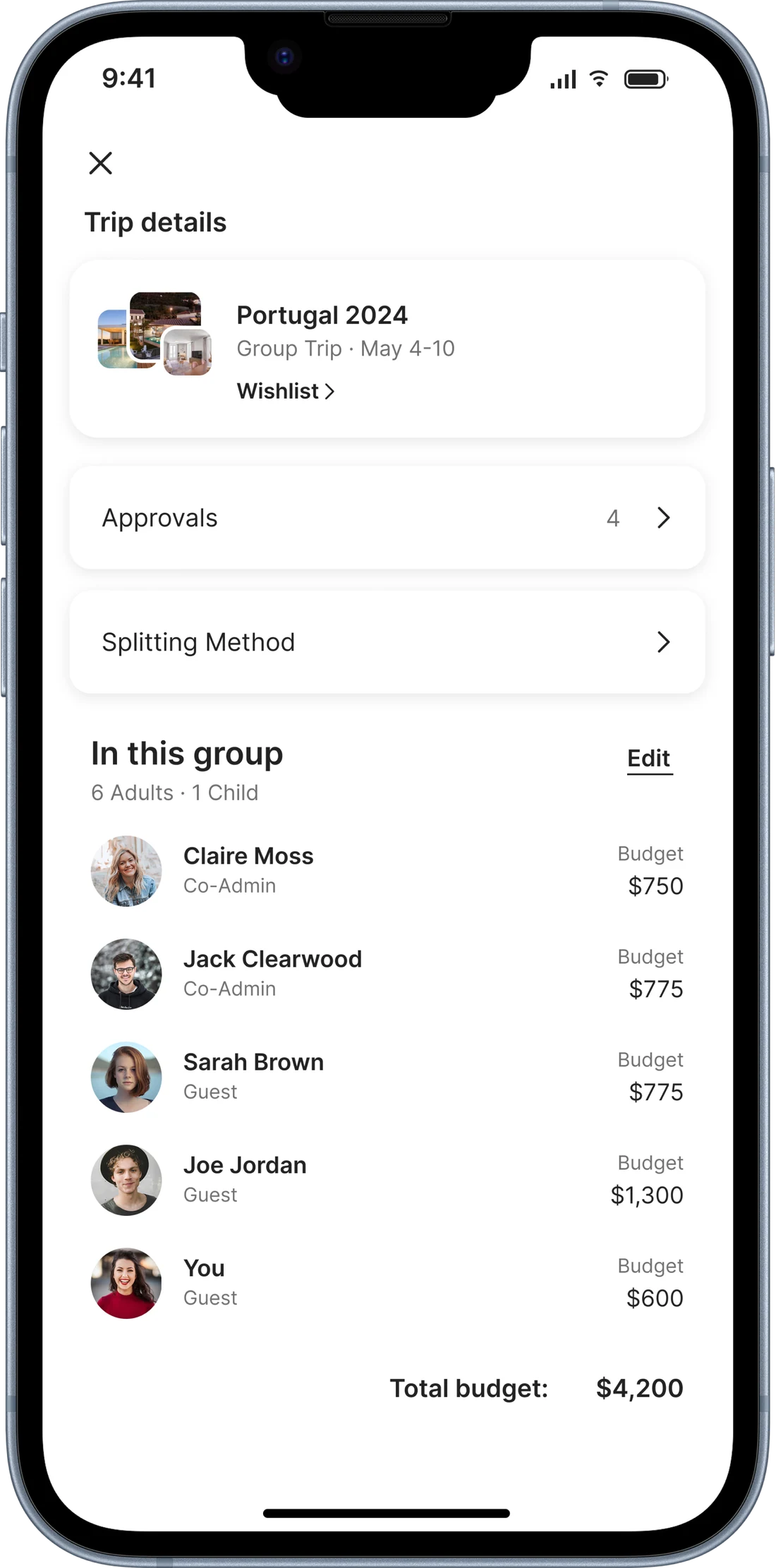
The group picks its definition of fair before anyone pays. EvenSplit for straight halves, FairValue for proportional splits by room or by nights, PayManage for custom amounts. Choosing the model up front turns the most uncomfortable conversation of the trip into a setup step.
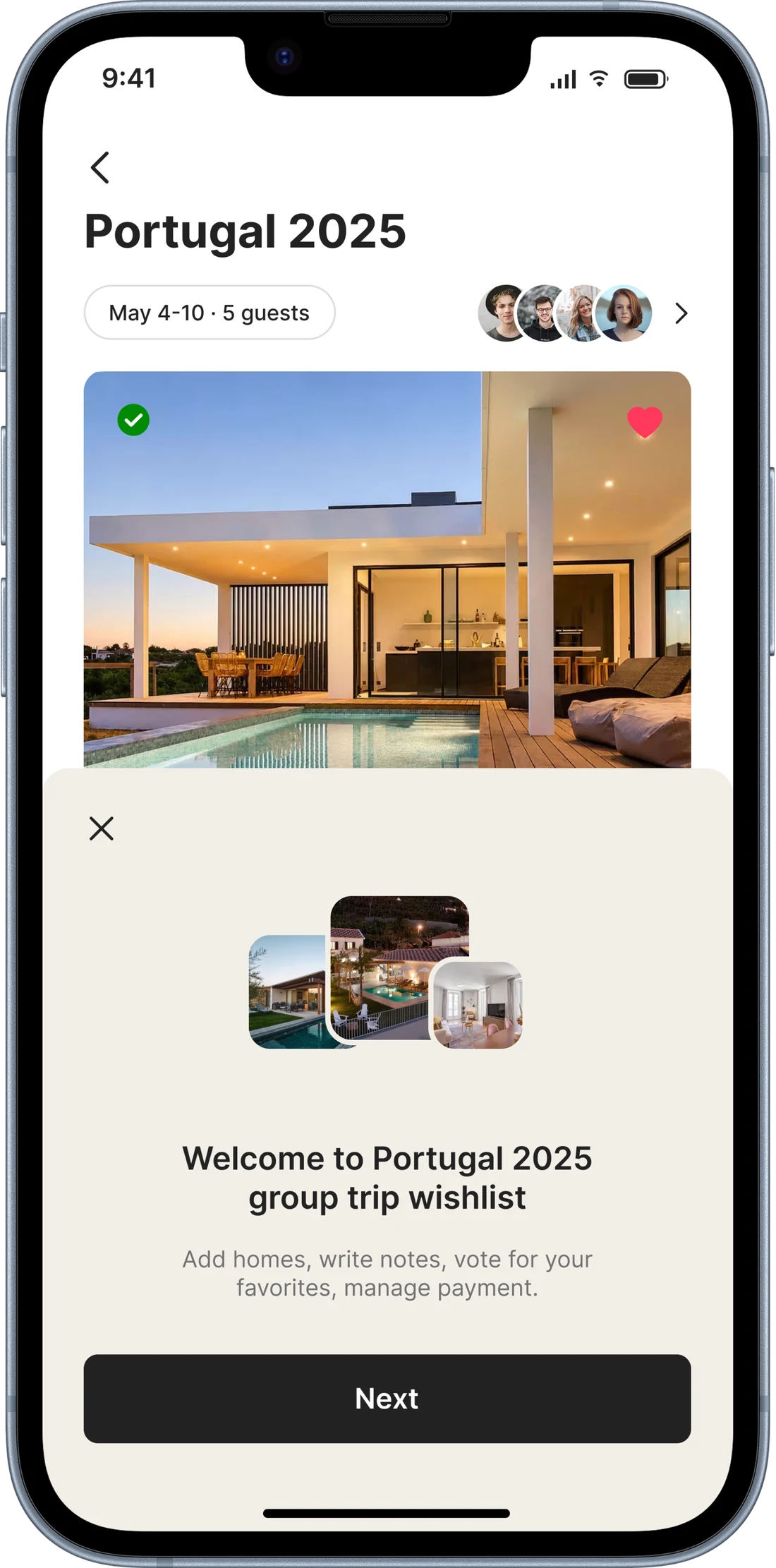
A shared wishlist, voting, and end-to-end visibility, with group sign-off required before anything books. Every member can see the reservation, the budget and where their share stands, which is the part the old flow never gave them.
Group trips normally get planned in a WhatsApp thread while the booking happens somewhere else, so context splits in two. Messaging moved into the trip flow itself, with notifications scoped to the trip, so the conversation and the decision finally sit in the same place.
Nobody had to be taught the group flow. What they hesitated on was who can see what.
Seamless group onboarding. Building the group feature into the wishlist flow meant users never had to learn a separate concept. They started group trips without being told how.
Clarity drives confidence. EvenSplit and FairValue were well received for their simplicity. PayManage caused hesitation: users weren’t sure who could see what, which pointed to a need for clearer affordances around privacy and transparency.
Feedback and visibility matter. Users missed the comments section and expected notifications for group actions. When someone joins, approves or pays, the group should know.
Human, start to finish.
No generative tools in this one. Research, Figma, and iteration.



- What the machine did
- Nothing.
- What I did
- Every part of it by hand. I led the design: the flows, the wireframes, the screens and the write-up.
Scale · Human–Machine Collaboration, Dubai Future Foundation
What this one changed about how I work
Looking back, I’d solve it with less
I answered a coordination problem by adding surface: a hub, three splitting models, a sign-off step, a message thread. Each one earned its place on its own, and stacked together they ask a group to learn a lot before anyone books a house. If I picked this up now I’d start from the least a group has to understand to get to a booking.
Whose definition of fair does the product encode?
That question is the whole project. Once we stopped trying to answer it for people, most of the rest of the design followed on its own.
Deliberate friction is a real design move
Group sign-off makes booking slower, and it was still the right call. Learning to argue for a slower flow on the grounds of who holds the power was the harder skill.
The thing I’d push harder on
The privacy hesitation PayManage surfaced. We identified it and didn’t get to resolve it. If I picked this back up, that’s where I’d start: a group can only share money honestly if everyone knows exactly who can see what.